


Factory Direct Pricing | Bulk Orders Available
Quartz wool is frequently used to fix filler and as a high-temperature insulator. Pesticides and other easily degradable samples are treated with silane, while acidic samples, including fatty acids and sulfur compounds, are treated with phosphate. The diameter of the fiber is categorized into three categories: coarse, fine, and ultra-fine. Coarse fibers have a thickness of 12 to 15 microns, and fine wool has a thickness of 7-9 microns. Because of its high surface area and thin thickness (approximately 3 microns), ultra-fine quartz wool is comparatively expensive. It can withstand high temperatures with ease. It is also non-flammable, non-combustible, and chemically inert, which makes it more desirable in the industry. We extrude high-purity rods (10-20ppm metallic) into micron diameter to yield the product. This is then gathered and packaged in various packing ranges such as 50gm, 100gm, 500gm, and 1 kg. Fine wool (4-8 micron diameter) and coarse wool are available in 1/2 pound packs (8-15 micron diameter). Quartz wool can withstand temperatures of up to 1100 degrees Celsius.
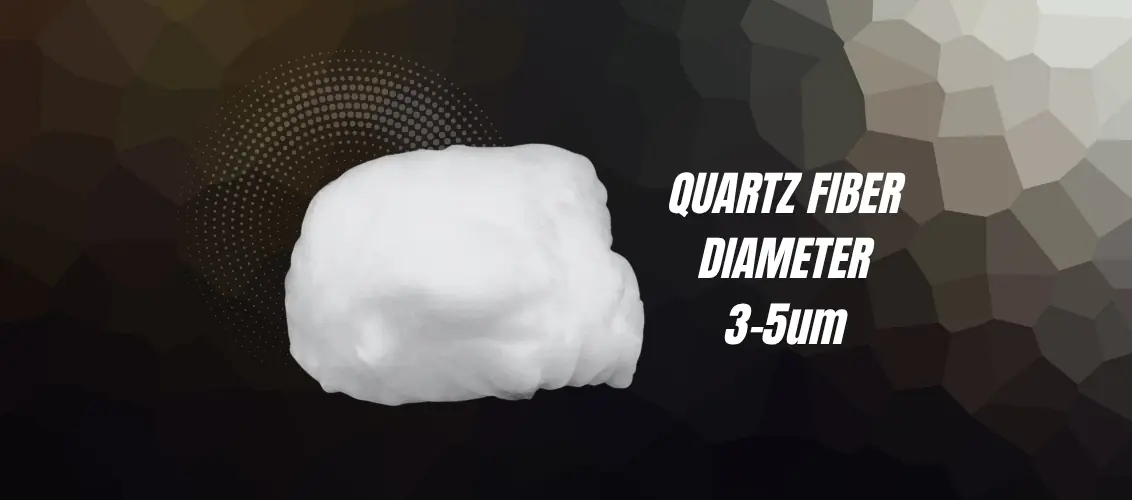
| Parameter | Specification |
|---|---|
| Material | High Purity Quartz (SiO₂) |
| Silica Content | ≥ 99.97% |
| Fiber Diameter | 3 – 5 µm |
| Form | Wool / Fibrous |
| Color | Milky White |
| Density | ~2.3 g/cm³ |
| Thermal Conductivity | 0.01 – 0.029 kcal/m·h·°C |
| Maximum Operating Temperature | 1300 – 1600°C |
| Maximum Limit Temperature | Up to 1700°C |
| Softening Point | ~1730°C |
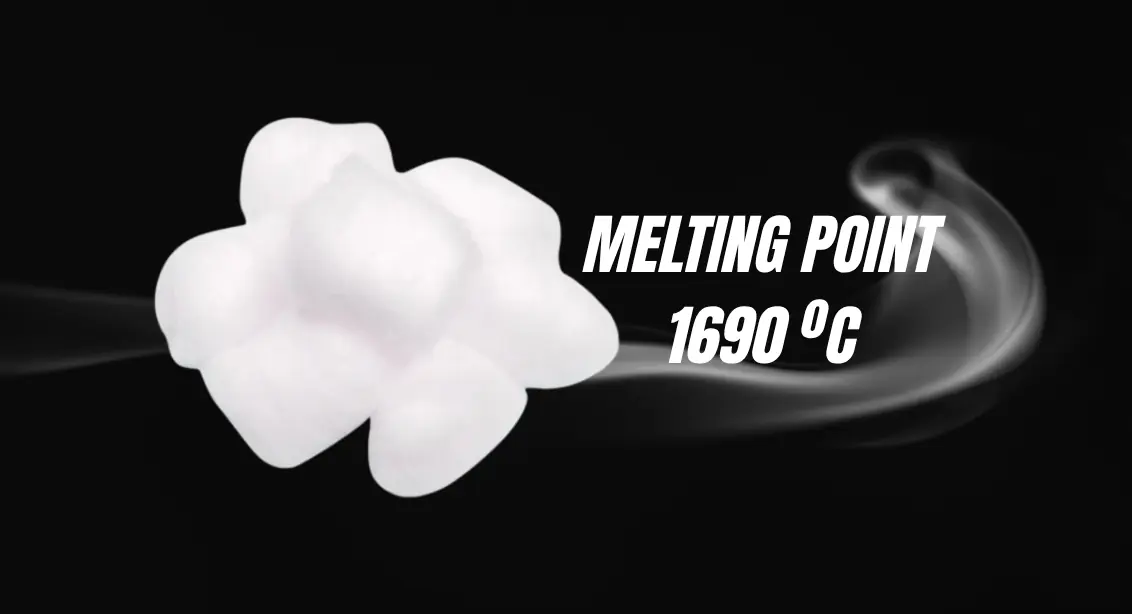
| Melting Point | ~1690°C |
| Moisture Content | ≤ 0.4% |
| Ignition Loss | ≤ 0.1% |
| Tensile Strength | > 0.05 N/TEX |
| Bulk Density | 5 – 6 kg/m³ |
| Electrical Resistivity | High (approx. 71 × 10⁷ Ω·cm) |
| Refractive Index | ~1.6 |
| Rigidity | 6 – 7 (Soft cotton-like) |
| Shape | Slender Fibers |
| Key Properties | High temperature resistance, low thermal conductivity, chemical inertness, non-flammable |
| Applications | Insulation, filtration, catalyst support, analytical instruments |
| Parameter | Quartz Wool | Glass Wool | Ceramic Fiber |
|---|---|---|---|
| Material Composition | High purity SiO₂ (≥ 99.97%) | Fiberglass (Silica + additives like CaO, Na₂O) | Alumina (Al₂O₃) + Silica (SiO₂) |
| Maximum Operating Temperature | 1300 – 1600°C | 250 – 500°C | 1000 – 1400°C |
| Melting Point | ~1690°C | ~700 – 800°C | ~1700 – 1800°C |
| Thermal Conductivity | Very Low | Low | Low |
| Chemical Resistance | Excellent (Highly inert) | Moderate | Good |
| Electrical Insulation | Excellent | Good | Good |
| Fiber Diameter | 3 – 5 µm | 5 – 10 µm | 2 – 4 µm |
| Density | ~2.2 – 2.3 g/cm³ | ~2.5 g/cm³ | ~2.6 – 2.8 g/cm³ |
| Bulk Density | 5 – 6 kg/m³ | 10 – 100 kg/m³ | 64 – 320 kg/m³ |
| Thermal Shock Resistance | Excellent | Moderate | Good |
| Flexibility | Soft, cotton-like | Flexible, compressible | Semi-flexible |
| Durability at High Temp | Outstanding | Poor | Very Good |
| Cost | High | Low | Medium |
| Typical Applications | Laboratory filtration, high-temp insulation, catalyst support | Building insulation, HVAC, soundproofing | Furnace linings, kilns, fireproof insulation |
| Key Advantage | Ultra-high purity & temperature resistance | Cost-effective insulation | High-temp industrial insulation |
Quartz Wool is the best mineral to utilize as an insulator due to its excellent thermal resistance and non-flammability. Because of its exceptional temperature resistance, it is mainly used for insulation. It is used in corrosive fluid and gas filtration, air pollution control, acid filtering, catalyst support, assistance bed in the distillation and HPLC column, IR heat diffuser, filler for analytical instruments, and numerous other applications. The fibers are shaped into the form of wool and can be utilized to make a variety of insulating goods.
Quartz Wool are mainly used as an insulation bed for catalysts in the reactor column. It is also utilized in a high-temperature reaction mainly as an insulator.

We, Shilpa enterprises, are popular for quartz quality and affordability. We manufacture high-quality Quartz Wool that is excellent for research and development activities. We have one of the top teams in the market, with over a decade of experience in the chemical business. We offer product customization to fit the needs of our clients. Because we have a specialized QA staff and expertise in fulfilling international quality standards, w, we accept both bulk and individual orders.
