Factory Direct Pricing | Bulk Orders Available
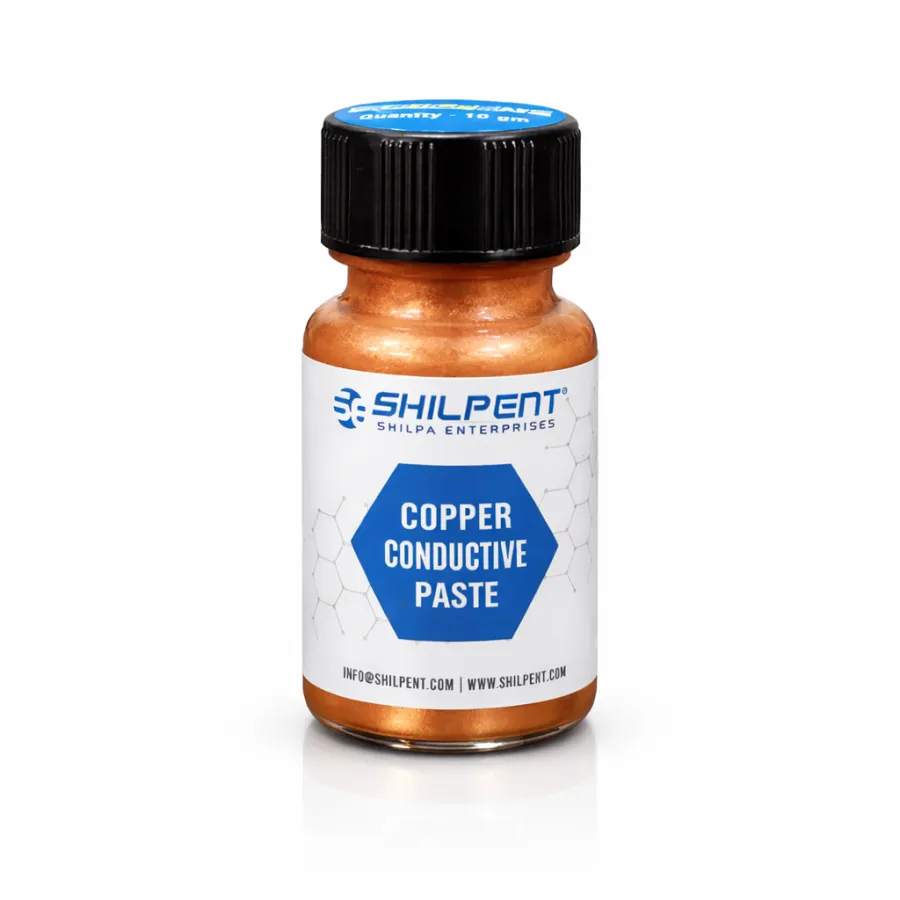
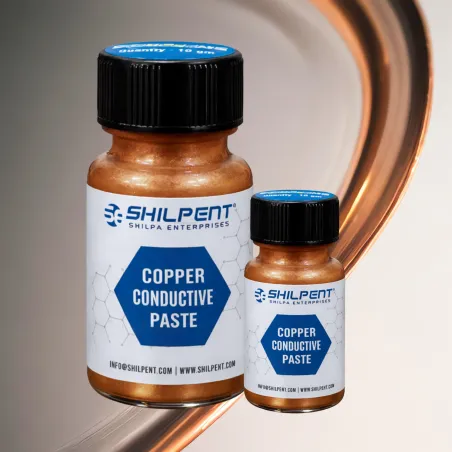
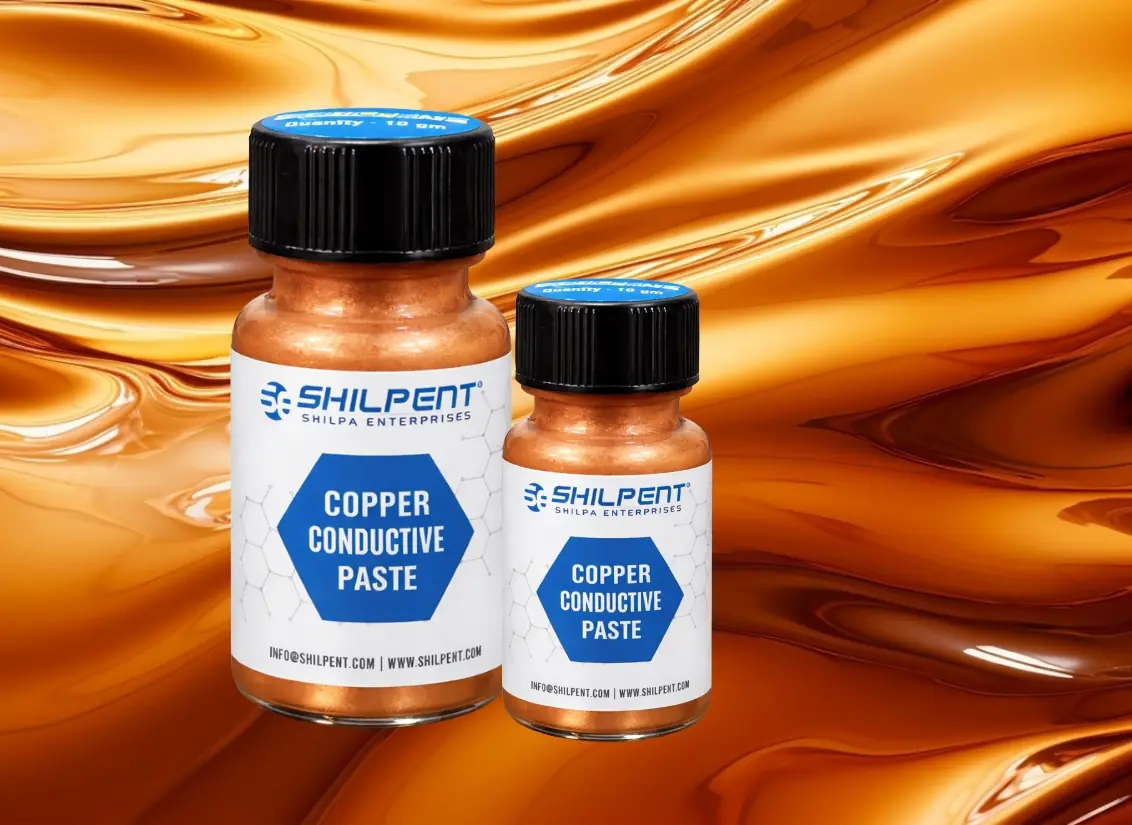
Copper Conductive Paste works as both a bonding agent and an electrical conductor in electronic parts. It is made by blending fine copper powder with a binder and a suitable solvent to create a paste that can be printed or dispensed easily. Specific variants contain a small proportion of zinc borosilicate and glass frit, generally 0.5–8 percent by weight, to enhance adhesion and mechanical strength after curing. Depending on design and production requirements, the paste is applied using screen printing, stencil coating, or precision dispensing. It is dried or cured by air exposure, regulated heating, or ultraviolet radiation. Once curing is complete, the paste forms a continuous copper layer, ensuring stable, reliable electrical connections.
Copper Conductive Paste is widely used in printed circuit boards, hybrid circuits, touch panels, and the fabrication of RFID antennas. It is also effective for repairing broken or damaged PCB tracks and for forming conductive paths on non-conductive substrates. The copper particles carry the electrical current, while the binder helps the paste stick firmly to the surface. The solvent adjusts the paste thickness and supports uniform layer formation during application. Many Copper Conductive Pastes cure at low temperatures, which aligns well with modern electronics manufacturing. They deliver reliable electrical performance and consistent results under different conditions.
| Copper Conductive Paste – Technical Specifications | |
|---|---|
| Product Name | Copper Conductive Paste |
| Composition | Copper particles dispersed in polymer binder |
| Appearance | Brown / Copper-colored smooth paste |
| Electrical Conductivity | High conductivity (low resistivity) |
| Resistivity | Typically low (depends on formulation) |
| Viscosity | High viscosity paste (screen printable / dispensable) |
| Particle Size | Micro / nano copper particles |
| Curing Method | Heat cure / air cure (depending on grade) |
| Curing Temperature | Typically 100°C – 180°C |
| Adhesion | Strong adhesion to glass, plastic, metal, and ceramics |
| Thermal Conductivity | Moderate to high |
| Application Methods | Screen printing, brushing, dispensing, spraying |
| Substrate Compatibility | Glass, PET, PCB, ceramics, metals |
| Applications | Printed electronics, PCB repair, EMI shielding, conductive tracks |
| Storage Conditions | Cool, dry place (preferably 5°C – 15°C) |
| Shelf Life | Typically 6 months (sealed container) |
| Packaging | Syringe / bottle (various sizes available) |
| Country of Origin | India |
Copper conductive ink is widely used in PCB manufacturing because it forms the electrical paths that allow circuits to operate. It can be applied to plastic surfaces for flexible electronics and touch-based systems. The ink is also used in solar cells, RFID tags, MEMS components, LED packaging, and repair work. It supports EMI and RFI shielding and is suitable for ground connections, rotary switches, and potentiometers. In addition, it helps create conductive patterns, improves touch response, supports wireless signals, restores damaged circuits, protects electronic devices, and enhances conductivity in many electronic components. Electronic packaging, PCB repair and rework, Solar cell interconnections, RF component assembly, Flexible printed circuits (FPC), and other high-precision electronic manufacturing processes.
| Property | Copper Conductive Paste | Silver Conductive Paste | Nickel Conductive Paste |
|---|---|---|---|
| Electrical Conductivity | High | Very High (Best) | Moderate |
| Resistivity | Low | Very Low | Medium |
| Cost | Low | Very High | Moderate |
| Oxidation Resistance | Low (oxidizes easily) | Excellent | Good |
| Thermal Conductivity | High | Very High | Moderate |
| Adhesion Strength | Good | Excellent | Good |
| Curing Temperature | 100°C – 180°C | 80°C – 150°C | 120°C – 200°C |
| Durability | Moderate | Excellent | High |
| Corrosion Resistance | Low | Excellent | Good |
| Best Use Cases | Cost-effective circuits, PCB repair | High-performance electronics, precision circuits | EMI shielding, grounding applications |
| Common Applications | Printed electronics, DIY circuits | Sensors, solar cells, high-end PCB | Shielding coatings, industrial electronics |
With more than ten years in the industry, Shilpent has built a strong presence as a trusted global supplier and manufacturer of Copper Conductive Paste. We focus on producing high-performance copper pastes and inks used across diverse applications. Quality is never an afterthought for us—it is checked at every stage, and our price remains fair and transparent. We collaborate with customers to understand their exact requirements and deliver solutions that fit their timelines and scale. Customer satisfaction guides every decision we make. Bulk orders are customized with care and shipped on schedule to avoid delays.
Reach out to us today for reliable products, attractive pricing, and prompt delivery on both retail and wholesale orders.